

Your thoughts on AI: findings from our recent survey
Artificial intelligence (AI) has become part of everyday life. Earlier this year, we asked you how you use it and what you think about its impact on society and your own lives. Here’s a snapshot of what you shared with us.
How often do you use AI?
Most of you said you use AI to some extent. Nearly half of you are frequent users, using AI at least several times a week. Only a minority rarely (18%) or never (16%) use it.
Male study members are a little more likely than female study members to use AI frequently (48% compared to 43%).
We found a bigger difference in use when we compared study members with a degree and those without. Almost six in ten (57%) of the graduates among you said they use AI several times a week. Among non-graduates, only around four in ten (39%) use AI this often. Study members without a degree were almost twice as likely as graduates to say they never use AI (19% compared to 11%).
How does your generation use AI?
We asked you how you use AI. Almost half of the AI users among you said you use it at work or for completing professional tasks (47%). This use of AI was more common among male study members than female study members (50% versus 42%), and also among study members with a degree than those without (63% versus 34%).
Some other uses of AI were more popular among female study members. For example, 22% of female study members said they use it for health and wellbeing information compared to 15% of males, and 28% of females use it for help with drafting emails, posts and other communications compared to 24% of males.
Is AI good or bad?
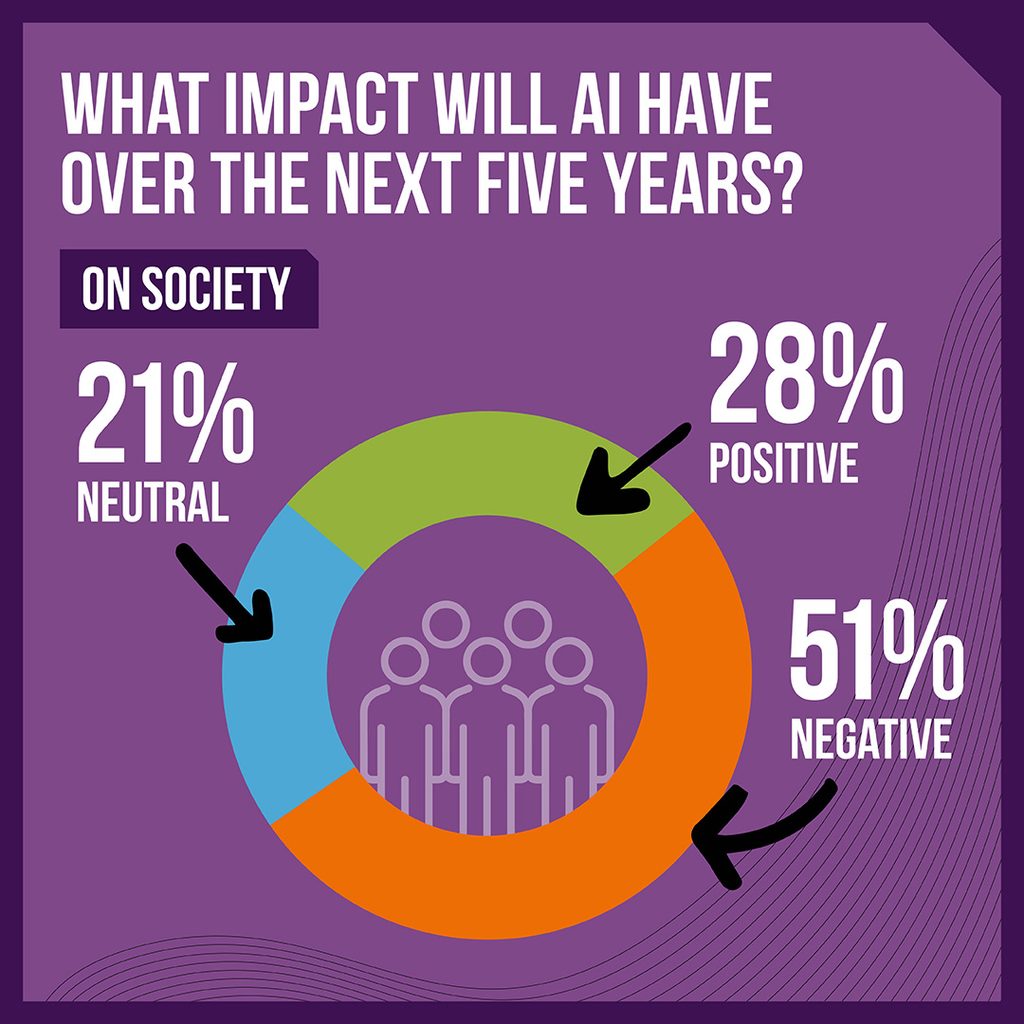
Just over half of you (51%) felt that AI would have an overall negative impact on society over the next five years. Female study members were a little more likely than male study members to have this view.
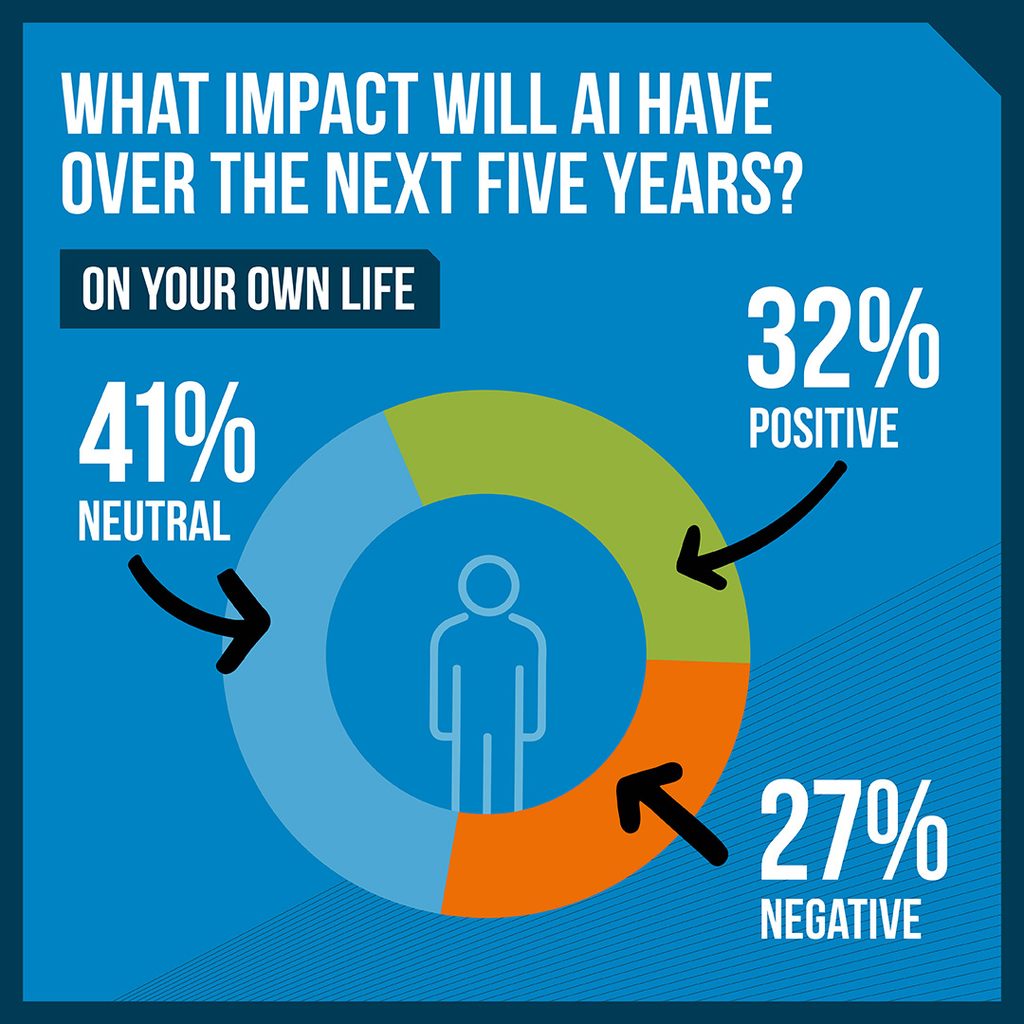
But you were more optimistic about AI in relation to your own lives. Just over a quarter (27%) thought it would have a negative impact on you personally while almost a third (32%) thought it would have a positive impact.
Description of image.
A pie chart showing study members’ views on the impact of AI on society. 28% think it will have a positive impact, 51% a negative impact, and 21% a neutral impact.
Description of image.
A pie chart showing study members’ views on the impact of AI on their own lives. 32% think it will have a positive impact, 27% a negative impact, and 41% a neutral impact.
We put the same questions to a group of people born 10 years earlier than you, who are taking part in a similar study to Child of the New Century. We found that your generation were more concerned about the impact of AI than this older generation.
What about AI and jobs?
Among those of you using AI at work, almost two thirds (64%) said it had improved your productivity. Male study members were a little more likely to think this than female study members (68% versus 61%).
But looking ahead, half of you said you expect AI to reduce jobs in your field over the next five years. Graduate study members were more likely to predict this than those without a degree (57% versus 48%).